
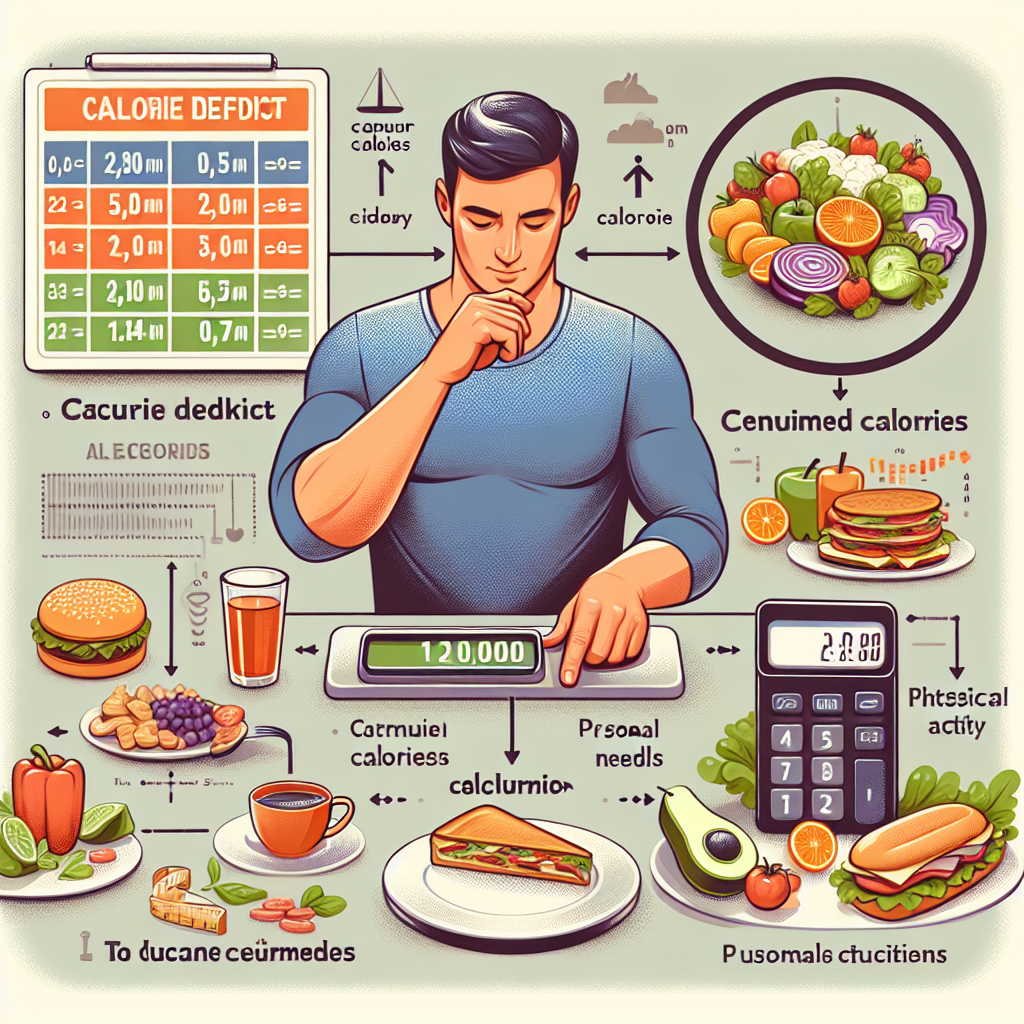
How to Calculate Calorie Deficit: The Ultimate Guide
Understanding how to calculate calorie deficit is essential for anyone looking to lose weight effectively. A calorie deficit occurs when you consume fewer calories than your body needs to maintain its current weight. This guide will walk you through the steps to accurately calculate your calorie deficit, ensuring you can achieve your weight loss goals in a healthy manner.

What is a Calorie Deficit?
A calorie deficit happens when your energy expenditure exceeds your caloric intake. This is crucial for weight loss; without a calorie deficit, losing weight becomes nearly impossible. To grasp how to calculate calorie deficit, it’s important to understand the basic principles of energy balance.
Energy Balance Explained
- Caloric Intake: This refers to the total number of calories you consume through food and beverages.
- Caloric Expenditure: This includes all the calories burned through daily activities, exercise, and basic metabolic processes.
When you consume more calories than you burn, you enter a caloric surplus, leading to weight gain. Conversely, a caloric deficit leads to weight loss. Knowing how to calculate calorie deficit is the first step toward managing your weight effectively.
Steps to Calculate Your Caloric Needs
To determine your calorie deficit, you first need to establish your caloric needs. Follow these steps:
1. Calculate Your Basal Metabolic Rate (BMR)
Your BMR is the number of calories your body needs at rest to maintain basic physiological functions. You can use the Harris-Benedict equation to calculate your BMR:
- For men: BMR = 88.362 + (13.397 × weight in kg) + (4.799 × height in cm) – (5.677 × age in years)
- For women: BMR = 447.593 + (9.247 × weight in kg) + (3.098 × height in cm) – (4.330 × age in years)
2. Determine Your Total Daily Energy Expenditure (TDEE)
Your TDEE accounts for your BMR and the calories burned through daily activities and exercise. To calculate your TDEE, multiply your BMR by an activity factor:
- Sedentary (little or no exercise): BMR × 1.2
- Lightly active (light exercise/sports 1-3 days a week): BMR × 1.375
- Moderately active (moderate exercise/sports 3-5 days a week): BMR × 1.55
- Very active (hard exercise/sports 6-7 days a week): BMR × 1.725
- Super active (very hard exercise, physical job, or training twice a day): BMR × 1.9
Once you have your TDEE, you can now understand how to calculate calorie deficit effectively.
How to Calculate Your Calorie Deficit
Now that you have your TDEE, it’s time to determine your calorie deficit. Here’s how:
1. Set Your Weight Loss Goal
Decide how much weight you want to lose. A safe and sustainable rate is about 0.5 to 1 kg (1 to 2 pounds) per week. To achieve this, you need a daily calorie deficit of:
- Approximately 500 calories for 0.5 kg (1 lb) loss per week.
- Approximately 1000 calories for 1 kg (2 lbs) loss per week.
2. Subtract Your Desired Deficit from Your TDEE
Use the following formula to find your daily calorie intake for weight loss:
Daily Caloric Intake = TDEE – Caloric Deficit
For example, if your TDEE is 2500 calories and you want to lose 0.5 kg per week, your calculation would be:
2500 – 500 = 2000 calories
Tracking Your Progress
To effectively manage your calorie deficit, tracking your intake and weight loss progress is essential. Here are some effective methods:
1. Use a Calorie Tracking App
Apps like MyFitnessPal or Cronometer can help you log your food intake and monitor your calorie deficit. These tools make it easier to see where you can adjust your diet to stay within your target.
2. Keep a Food Journal
Writing down what you eat can increase your awareness of your eating habits and help you stay accountable. This can be a simple notebook or a digital document.
Adjusting Your Calorie Deficit
As you lose weight, your caloric needs will change. It’s important to adjust your calorie deficit accordingly. Here’s how:
1. Reassess Your BMR and TDEE
As you lose weight, your BMR will decrease. Recalculate your BMR and TDEE every few weeks to ensure you’re still on track.
2. Avoid Extreme Calorie Deficits
While it may be tempting to create a large calorie deficit, it’s crucial to avoid extreme restrictions. This can lead to muscle loss, nutritional deficiencies, and a slower metabolism. A moderate deficit is more sustainable and healthier.
Common Mistakes in Calculating Calorie Deficit
how to calculate calorie deficit involves avoiding common pitfalls. Here are some mistakes to watch out for:
1. Ignoring Liquid Calories
Many people overlook the calories in beverages. Sugary drinks, alcohol, and even some smoothies can add up quickly, impacting your calorie deficit.
2. Underestimating Portion Sizes
It’s easy to underestimate how much you’re eating. Use a food scale or measuring cups to ensure accurate portion sizes.
3. Not Accounting for Exercise
When you exercise, you burn additional calories, which can affect your overall deficit. Make sure to factor in these calories when calculating your intake.
: Why Understanding Calorie Deficit Matters
Knowing how to calculate calorie deficit is vital for effective weight management. By accurately assessing your caloric needs and maintaining a healthy deficit, you can achieve your weight loss goals safely and sustainably. Remember to track your progress and adjust your intake as necessary, ensuring a balanced approach to your health and fitness journey.
Additional Resources
For further reading on calorie counting and weight loss strategies, check out these reputable sources:
Understanding Basal Metabolic Rate (BMR)
When it comes to weight management and overall health, Understanding Basal Metabolic Rate (BMR) is crucial. BMR refers to the number of calories your body needs to maintain basic physiological functions while at rest. This includes breathing, circulation, cell production, and nutrient processing. In this article, we will explore what BMR is, how to calculate it, and its significance in your daily caloric needs.
What is Basal Metabolic Rate (BMR)?
Understanding Basal Metabolic Rate (BMR) is essential for anyone looking to manage their weight effectively. BMR accounts for approximately 60-75% of your total daily energy expenditure (TDEE). The remaining calories are burned through physical activity and the thermic effect of food.
The Importance of BMR in Weight Management
- Helps determine your caloric needs.
- Guides weight loss or gain strategies.
- Assists in understanding how lifestyle changes affect metabolism.
How to Calculate Your BMR
To accurately assess your BMR, you can use several formulas, the most popular being the Harris-Benedict Equation. Here’s how to calculate it:
Harris-Benedict Equation
For men:
BMR = 88.362 + (13.397 × weight in kg) + (4.799 × height in cm) - (5.677 × age in years)
For women:
BMR = 447.593 + (9.247 × weight in kg) + (3.098 × height in cm) - (4.330 × age in years)
Using Online Calculators
If you prefer a simpler method, various online calculators can help you determine your BMR. Just input your age, weight, height, and gender. Here’s a reliable resource for BMR calculation.
Factors Affecting BMR
Several factors influence your Understanding Basal Metabolic Rate (BMR). These include:
1. Age
As you age, muscle mass decreases, which can lower your BMR.
2. Gender
Men typically have a higher BMR than women due to greater muscle mass.
3. Body Composition
More muscle mass increases BMR, while more fat mass decreases it.
4. Hormonal Factors
Hormones, particularly thyroid hormones, can significantly affect your metabolic rate.
How BMR Relates to Total Daily Energy Expenditure (TDEE)
Understanding Basal Metabolic Rate (BMR) is just one piece of the puzzle. To maintain or lose weight, it’s essential to consider your TDEE, which includes:
- BMR
- Physical activity (exercise, daily movements)
- Thermic effect of food (calories burned during digestion)
Calculating Your TDEE
To find your TDEE, multiply your BMR by an activity factor:
- Sedentary (little or no exercise): BMR × 1.2
- Lightly active (light exercise/sports 1-3 days/week): BMR × 1.375
- Moderately active (moderate exercise/sports 3-5 days/week): BMR × 1.55
- Very active (hard exercise/sports 6-7 days a week): BMR × 1.725
- Super active (very hard exercise/sports & a physical job): BMR × 1.9
Using BMR for Weight Loss
Once you have calculated your BMR and TDEE, you can establish a calorie deficit for weight loss. A common approach is:
- Determine your TDEE.
- Subtract 500-1000 calories for a safe weight loss of 1-2 pounds per week.
For more information on calorie deficits, visit this guide.
Understanding Basal Metabolic Rate (BMR) is foundational for anyone looking to manage their weight effectively. By knowing your BMR, you can make informed decisions about your diet and exercise routines, leading to better health outcomes.
Understanding Basal Metabolic Rate (BMR)
Understanding Basal Metabolic Rate (BMR) is crucial for anyone looking to manage their weight effectively. BMR is the number of calories your body needs to maintain basic physiological functions while at rest. This includes processes like breathing, circulation, and cell production. Knowing your BMR can help you create a tailored nutrition plan and understand how many calories you should consume daily.
What is Basal Metabolic Rate (BMR)?
Understanding Basal Metabolic Rate (BMR) involves recognizing that it represents the minimum energy expenditure required to sustain life. Factors influencing BMR include:
- Age: BMR decreases with age.
- Gender: Males generally have a higher BMR than females.
- Body Composition: Muscle mass increases BMR, while fat mass decreases it.
- Genetics: Some individuals naturally have a higher or lower BMR.
How to Calculate Your BMR
Understanding Basal Metabolic Rate (BMR) is essential for calculating your daily caloric needs. There are several formulas to estimate BMR, with the Harris-Benedict equation being one of the most popular:
Harris-Benedict Equation
For men:
BMR = 88.362 + (13.397 × weight in kg) + (4.799 × height in cm) – (5.677 × age in years)
For women:
BMR = 447.593 + (9.247 × weight in kg) + (3.098 × height in cm) – (4.330 × age in years)
Using Online Calculators
Many online calculators can help you calculate your BMR. These tools make it easy to input your personal data and receive an instant result. For a reliable calculator, visit Calculator.net.
Factors Affecting BMR
Understanding Basal Metabolic Rate (BMR) also involves acknowledging various factors that can influence it:
1. Muscle Mass
More muscle means a higher BMR since muscle burns more calories at rest compared to fat.
2. Hormonal Changes
Thyroid hormones significantly impact BMR. An underactive thyroid can lower your BMR, while an overactive thyroid can raise it.
3. Environmental Factors
Extreme temperatures can affect BMR. Your body may burn more calories to maintain a stable internal temperature.
Why is BMR Important?
Understanding Basal Metabolic Rate (BMR) is vital for several reasons:
- Weight Management: Knowing your BMR helps you create a caloric deficit or surplus for weight loss or gain.
- Personalized Nutrition: Tailor your dietary intake based on your BMR for optimal health.
- Fitness Goals: Align your exercise regimen with your caloric needs to achieve your fitness objectives.
How to Use BMR in Your Daily Life
After calculating your BMR, you can use it to determine your Total Daily Energy Expenditure (TDEE). TDEE considers your activity level:
- Sedentary (little or no exercise): BMR x 1.2
- Lightly active (light exercise/sports 1-3 days/week): BMR x 1.375
- Moderately active (moderate exercise/sports 3-5 days/week): BMR x 1.55
- Very active (hard exercise/sports 6-7 days a week): BMR x 1.725
- Super active (very hard exercise/sports & a physical job): BMR x 1.9
By understanding your BMR and TDEE, you can effectively manage your caloric intake and achieve your health goals. For more information on calorie management, check out this guide on how to calculate calorie deficit.
Understanding Basal Metabolic Rate (BMR)
Understanding Basal Metabolic Rate (BMR) is crucial for anyone aiming to manage their weight effectively. BMR represents the number of calories your body requires at rest to maintain basic physiological functions such as breathing, circulation, and cell production. This article will delve into the intricacies of BMR, its calculation, and its significance in weight management.
What is Basal Metabolic Rate (BMR)?
Understanding Basal Metabolic Rate (BMR) involves recognizing that it constitutes a significant portion of your daily energy expenditure. BMR accounts for approximately 60-75% of the total calories burned daily. Factors influencing BMR include:
- Age
- Gender
- Body composition
- Genetics
Importance of BMR in Weight Management
Understanding Basal Metabolic Rate (BMR) is essential for creating effective weight loss or maintenance strategies. Knowing your BMR helps you determine how many calories you need to consume to achieve your goals. Here’s why BMR is important:
- Helps in calculating daily caloric needs.
- Guides dietary choices and meal planning.
- Assists in setting realistic weight loss goals.
How to Calculate Your BMR
There are several methods to calculate BMR, with the Harris-Benedict equation being one of the most commonly used. Here’s how to calculate your BMR using this formula:
For Men:
BMR = 88.362 + (13.397 × weight in kg) + (4.799 × height in cm) – (5.677 × age in years)
For Women:
BMR = 447.593 + (9.247 × weight in kg) + (3.098 × height in cm) – (4.330 × age in years)
Example Calculation
For a 30-year-old woman weighing 70 kg and 165 cm tall:
BMR = 447.593 + (9.247 × 70) + (3.098 × 165) – (4.330 × 30) = 1,500 calories/day
Factors Affecting BMR
Understanding Basal Metabolic Rate (BMR) also means recognizing the factors that can alter it:
- Muscle Mass: More muscle increases BMR.
- Age: BMR decreases with age.
- Hormonal Changes: Thyroid hormones can significantly impact BMR.
- Diet: Caloric restriction can lower BMR.
How to Increase Your BMR
Here are some effective strategies to boost your BMR:
- Strength Training: Build muscle mass to increase BMR.
- Stay Active: Incorporate regular physical activity.
- Eat Enough Protein: Protein-rich foods can boost metabolism.
- Stay Hydrated: Water can temporarily boost BMR.
Understanding BMR and Your Daily Caloric Needs
To maintain or lose weight, it’s essential to understand how BMR fits into your overall caloric needs. Here’s a simple formula:
Total Daily Energy Expenditure (TDEE) = BMR × Activity Level
Activity levels can be categorized as follows:
- Sedentary: BMR × 1.2
- Lightly active: BMR × 1.375
- Moderately active: BMR × 1.55
- Very active: BMR × 1.725
- Extra active: BMR × 1.9
Understanding Basal Metabolic Rate (BMR) allows you to tailor your caloric intake based on your unique needs. For more insights on how to calculate calorie deficit, visit this link.
Understanding Basal Metabolic Rate (BMR) is a foundational element of effective weight management. By calculating your BMR and recognizing the factors that influence it, you can create a tailored approach to your dietary and fitness goals.